

Channel Drains, French Drains, and Surface Drains: Which One Does Your Fort Worth Yard Actually Need?
Published at May 29, 2026 | Category: Drainage Services
If your Fort Worth yard has standing water after rain, soggy grass that never seems to dry out, or moisture creeping toward your foundation, you already know you have a drainage problem. What most homeowners do not know is exactly which type of drainage system is the right fix — and choosing the wrong one means spending money without solving the problem.
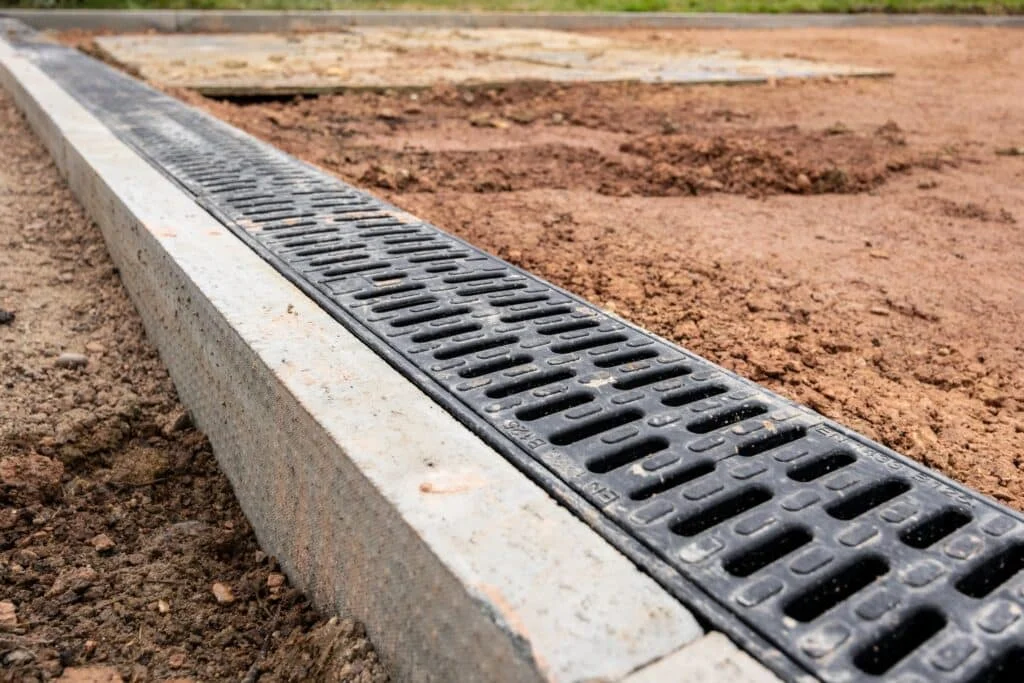
There are three primary drainage systems used on residential properties in the Fort Worth area: channel drains, French drains, and surface drains. Each one addresses a different type of water management challenge. Understanding the difference helps you have a smarter conversation with your contractor and ensures you get a system that actually works.
Why Fort Worth Has More Drainage Problems Than Most Cities
Fort Worth sits on Blackland Prairie soil — a dense, expansive clay that does not absorb water the way sandy or loamy soils do. When it rains, Fort Worth clay becomes quickly saturated and sheds water across the surface rather than allowing it to percolate down. This creates the standing water, soggy yards, and foundation moisture problems that Tarrant County homeowners deal with regularly.
Add to that the fact that Fort Worth gets nearly 38 inches of rainfall per year — much of it in fast, heavy events rather than slow steady rain — and you have a recipe for water management challenges that generic drainage solutions frequently fail to address. The right drainage system for a Fort Worth property needs to be engineered for clay soil and high-intensity rainfall, not just installed from a template.
Channel Drains: The Right Tool for Surface Sheet Flow
A channel drain — also called a trench drain — is a linear surface drainage system. It consists of a long, narrow grated channel installed in a trench across a paved or hardscaped surface, connected to an underground pipe that routes collected water to a discharge point.
Channel drains are the right solution when water is flowing across a surface in a predictable direction and needs to be intercepted at a specific line. The most common applications in Fort Worth include:
Driveway approaches where water flows toward garage doors during heavy rain. Patios and walkways where runoff from adjacent lawn areas crosses the hardscape. Building perimeters where sheet flow accumulates against foundation walls. Transition points between sloped yard areas and lower outdoor living spaces.
What channel drains do not address: subsurface groundwater, saturated soil conditions, or localized pooling in yard low spots away from hardscape. For those problems, you need a different system.
French Drains: The Right Tool for Subsurface Water
A French drain is a subsurface drainage system — it works underground rather than at the surface. It consists of a perforated pipe surrounded by gravel and wrapped in filter fabric, buried in a sloped trench and connected to an outlet that discharges collected water away from the property.
French drains address the type of water that channels through the ground rather than flowing across the surface. They are the appropriate solution for:
Yards that stay soggy for days after rain, even in areas that appear flat. Foundation moisture that results from groundwater accumulation against the foundation wall. Saturated landscape beds where plantings repeatedly fail from wet feet. Water that migrates from neighboring uphill properties through the soil.
In Fort Worth’s clay-heavy soil, French drains are among the most commonly needed drainage solutions — because clay soil holds water underground in ways that surface drainage cannot reach. A properly designed French drain intercepts that subsurface moisture before it saturates the soil zone where roots and foundations live.
One important note: French drains in clay soil need to be designed specifically for clay conditions. The aggregate size, filter fabric specification, pipe diameter, and outlet placement all matter in ways that do not apply in sandy soils. Generic French drain installations that work in other climates frequently underperform in Fort Worth without these adjustments.
Surface Drains: The Right Tool for Localized Pooling
A surface drain — also called an area drain or yard drain — is a catch basin positioned at a specific low point in a yard or hardscape surface. It collects standing water that has nowhere else to go and channels it through underground pipe to a discharge outlet.
Surface drains are the most targeted solution — they address specific, discrete pooling problems rather than broad drainage conditions. They are the right choice when:
A specific low spot in the yard consistently holds water for more than 24 hours after rain. Water pools near outdoor living areas, patios, or play areas after storms. A yard depression creates a mosquito habitat and lawn damage zone season after season.
Surface drains are often the most economical drainage solution for clearly defined problems. Their limitation is that they only address water that has already pooled — they do not intercept water flowing across the surface (channel drains do that) or water moving underground (French drains do that).
When You Need More Than One System
Many Fort Worth properties have drainage challenges that require more than one system type working together. A property might need a channel drain at the driveway approach, a French drain along the back fence line where subsurface water migrates from a neighbor’s yard, and a surface drain in the backyard low spot that pools after every storm.
The most important thing is starting with a thorough site evaluation that identifies where the water is coming from, how it is moving, and where it is accumulating before any installation decisions are made. A comprehensive drainage assessment distinguishes between surface problems, subsurface problems, and grade problems — because each requires a different solution, and combining them incorrectly wastes money.
How Greenview Landscaping Approaches Drainage in Fort Worth
Greenview Landscaping provides drainage assessment and installation for residential and commercial properties throughout Fort Worth and the surrounding DFW communities. We have been solving drainage problems in Tarrant County’s clay soil since 2016, and we approach every project the same way: site evaluation first, solution recommendation second, installation third.
We do not recommend a drainage system type until we understand the specific water management challenge your property presents. That means we look at grade and slope, observe flow patterns, evaluate soil conditions, and assess outlet options before developing a proposal.
Our drainage services include channel drain installation, French drain installation, surface drain installation, and combination drainage systems for properties with multiple challenges. We also integrate drainage planning into every landscape and hardscape project we design, because the best time to address drainage is before the patio or planting goes in — not after.
If your Fort Worth property has standing water, soggy yard areas, or foundation moisture issues, contact Greenview Landscaping at (817) 393-3144 for a free drainage assessment. We will evaluate your property, explain what is causing the problem, and recommend the right solution for your specific situation.
Schedule a Free Drainage Assessment: https://www.greenviewdfw.com/contact/