

The Fort Worth Lawn and Landscape Maintenance Calendar: What to Do Every Month to Keep Your Property Looking Its Best Year-Round
Published at August 14, 2026 | Category: Landscape Service
North Texas is not a forgiving environment for lawns and landscapes that are maintained on a generic calendar. The combination of warm-season turf that goes completely dormant in winter, clay soil that behaves differently than most maintenance guides assume, a summer heat that is more intense and more prolonged than most calendar advice is written for, and a fall and spring window that is shorter than what homeowners from other climates expect means that timing matters in ways that are specific to this region.
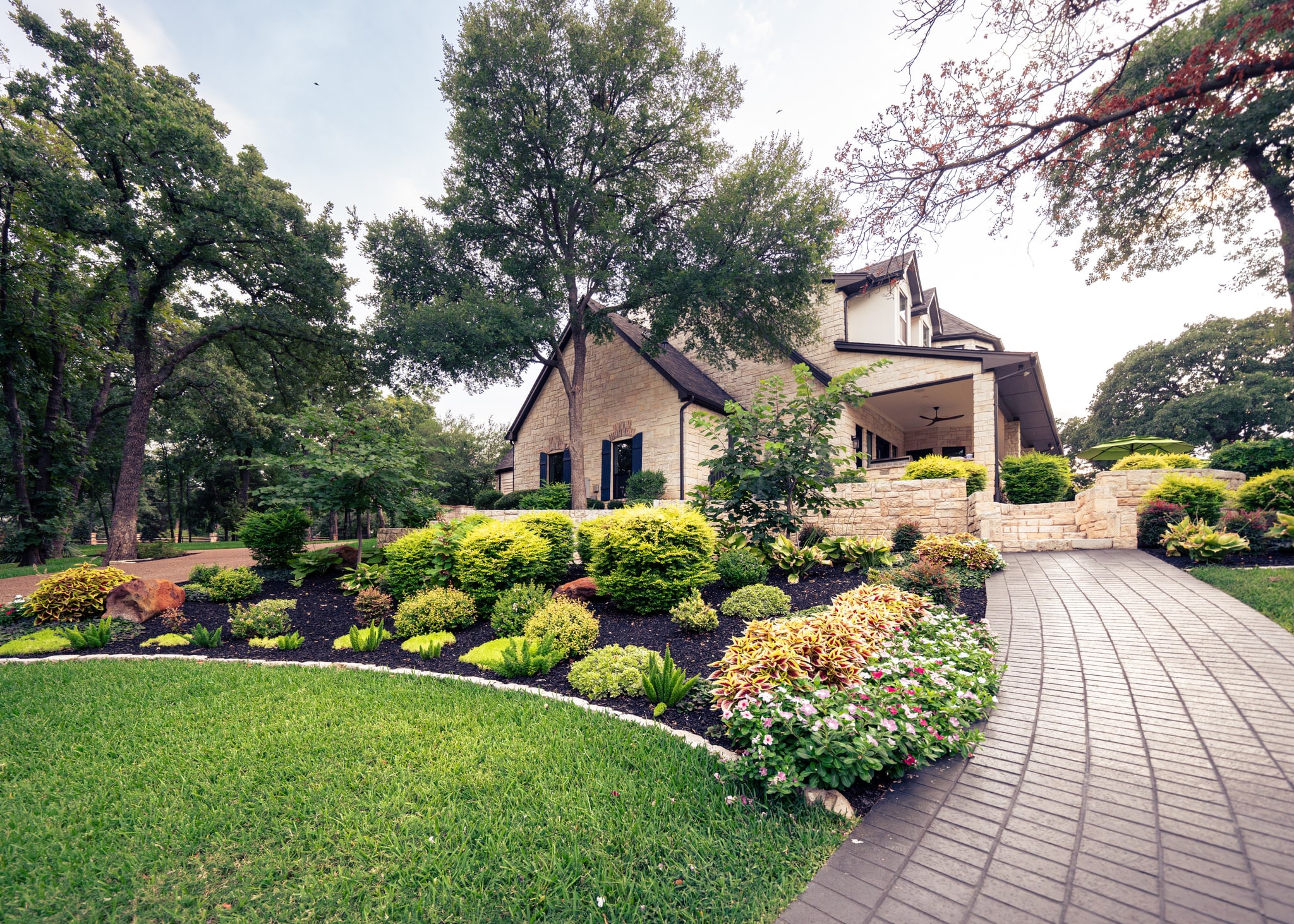
This calendar covers Fort Worth conditions specifically, based on the turf types, soil characteristics, and seasonal patterns of Tarrant County. Follow it, and the work you do each month compounds into a property that holds its quality through the whole year rather than looking great for one season and struggling for two.
January and February: Rest and Preparation
Warm-season turf in Fort Worth is fully dormant in January and February. The lawn is tan and dry and needs very little attention, which is appropriate because this is the time to focus on everything else.
Dormant Pruning of Trees and Shrubs
Late January through mid-February is the ideal time to prune most ornamental trees and deciduous shrubs. Plants are at their lowest metabolic activity, and pruning before bud break minimizes stress and reduces the risk of disease transmission through fresh cuts. Crape myrtles should be selectively pruned for structure rather than topped. Topping crape myrtles, commonly called “crape murder” in the landscaping industry, produces vigorous but structurally weak growth that ultimately harms the tree. Remove crossing branches, branches that grow toward the center of the canopy, and branches that rub against structures or other limbs.
Irrigation System Winter Check
If a hard freeze is forecasted, the irrigation system should be shut down at the controller and the backflow preventer insulated or the system blown out with compressed air. Fort Worth winters are mild enough that many systems run year-round, but any significant freeze event risks cracking the PVC fittings at the backflow preventer and lateral line connections. A few minutes of winter preparation prevents a repair bill in the spring.
Soil Amendment Planning
January is a good time to take a soil test if you have not done one recently. Fort Worth’s clay soil often has pH and nutrient imbalances that affect fertilizer response, and knowing the actual numbers allows you to apply amendments that address real deficiencies rather than spending money on fertilizers that will not be absorbed in suboptimal soil conditions. County extension offices and many landscape supply companies offer soil testing services.
March: Wake-Up Time
March is the transitional month when Fort Worth landscapes begin to stir. Soil temperatures rise toward the 65-degree threshold that triggers warm-season turf break from dormancy, and the window for several critical treatments opens.
Pre-Emergent Weed Control
The single most impactful lawn care treatment most Fort Worth homeowners can apply is a pre-emergent herbicide in early to mid-March, before soil temperatures consistently reach 55 degrees. Pre-emergent stops annual grassy weeds, including crabgrass, the most common and most damaging lawn weed in North Texas, from germinating. Applied at the right time, a single pre-emergent treatment significantly reduces the weed pressure the lawn will face all summer. Applied too late, after weeds have already germinated, it does nothing. This timing window closes fast in Fort Worth, often by late March.
Spring Irrigation Activation
Before the irrigation system runs its first spring cycle, walk each zone with the system running and look for any heads that were damaged over winter, heads that are not rotating or retracting properly, and any areas with obvious coverage gaps. A head discovered broken in March costs a service visit. The same head running all summer at the wrong pressure or angle means either dry spots or water waste for the next five months. Ask your landscape maintenance provider to include an irrigation check in the spring activation visit, or contact Greenview Landscaping for a drainage and irrigation assessment.
First Round of Spring Cleanup
Cut back any ornamental grasses left standing through the winter before new growth emerges from the base. Pull the previous season’s annual plant material from beds and refresh the mulch layer to two to three inches, which is the depth that effectively suppresses weeds and retains soil moisture through the summer without suffocating plant crowns. Avoid piling mulch against plant stems or tree trunks.
April: Green-Up Season
By mid-April, warm-season turf in Fort Worth is actively growing and green-up is well underway. This is when regular maintenance rhythm begins.
Begin Regular Mowing
Begin regular mowing as soon as the turf is actively growing and reaches one-third above its target height. Bermuda grass target height is 1 to 1.5 inches. Zoysia target height is 1.5 to 2 inches. St. Augustine target height is 2.5 to 3.5 inches. Never remove more than one-third of the blade height in a single mowing. Cutting too low in one pass scalps the lawn and sets it back weeks. A professional lawn maintenance schedule calibrated to your specific turf type produces better results than a generic mowing frequency that treats all grass the same.
First Fertilization of the Season
Once the turf has broken full dormancy and is showing active green growth, typically mid-April in Fort Worth, the first fertilization of the season can be applied. A slow-release nitrogen fertilizer appropriate for your turf type supports the push of spring growth. Applying fertilizer before the turf is fully out of dormancy wastes product and can push growth that is subsequently damaged by a late cold event.
Spring Planting
April is the primary spring planting window for warm-season annuals, perennials, and most woody landscape material. Choose species that are rated for North Texas summer heat rather than plants that look appealing in the spring nursery display and struggle by July. Native and adapted species, along with summer annuals like vinca, pentas, and lantana, handle Fort Worth summers reliably. See our landscaping services page for more on plant selection appropriate to North Texas conditions.
May: Before the Heat Arrives
May is the last comfortable working month before Fort Worth summer becomes challenging. It is the best time to complete any landscape construction or installation projects that require significant manual labor.
Second Pre-Emergent Application
A second pre-emergent application in early May extends protection into the summer, particularly for warm-season weeds that germinate in progressively higher soil temperatures. Not every lawn needs this second application, but lawns with heavy weed pressure in prior seasons benefit from the additional coverage.
Hardscape and Outdoor Living Installation Window
May is the last ideal month to complete patio installations, pergola builds, and outdoor living projects before summer heat makes both the construction conditions and the concrete curing conditions more challenging. If you have been considering adding an outdoor patio, pergola, or fire pit for summer use, beginning the project in May allows completion before peak summer.
Deep Irrigation Check
Before the high-demand summer irrigation season begins in earnest, run each zone manually and confirm that coverage is complete, heads are at the correct height and angle, and the controller programming reflects the water demand that July and August will create. Irrigation systems that were adequate in April’s moderate conditions may not provide sufficient coverage at summer peak demand without a programming adjustment.
June, July, August: Managing the Heat
Fort Worth summers are genuinely demanding for lawns and landscapes. Sustained temperatures above 100 degrees, low rainfall, and high evapotranspiration rates stress plant material and test irrigation systems in ways that spring and fall do not.
Mowing Height Adjustment
During periods of extreme heat and drought stress, raise mowing height by half an inch above normal target heights. Higher cutting leaves more leaf blade to shade the soil, reduces moisture loss from the turf surface, and gives the plant more photosynthetic surface area to support root maintenance during stress conditions. Scalping a lawn during a 105-degree heat wave is one of the fastest ways to create recovery problems that last through the fall.
Watering Restrictions Compliance
Fort Worth and most surrounding municipalities have watering restrictions that limit irrigation to specific days and times during the summer months. These restrictions are typically two days per week for residential properties, with even-numbered addresses watering on different days than odd-numbered addresses. Smart irrigation controllers set to the permitted schedule and calibrated for the property’s actual water demand are the most efficient way to maintain turf quality within restriction limits.
Summer Fertilization
A second fertilization in June and potentially a third in late July supports active summer growth and helps turf recover from heat and foot traffic stress. Use a fertilizer appropriate for summer application, typically lower in nitrogen than the spring push formula and potentially including micronutrients like iron that drive color without pushing excessive growth during heat stress periods.
Pest and Disease Monitoring
Summer is the peak period for fungal diseases in St. Augustine lawns, particularly gray leaf spot and take-all root rot, both of which are common in Fort Worth’s hot, humid summer conditions. Brown patch fungus affects Bermuda and other warm-season turf species in overwatered or poorly drained conditions. Identifying these diseases early and adjusting irrigation or applying targeted fungicide treatments prevents small affected areas from spreading into large sections of lawn damage.
September and October: Fall Recovery and Preparation
September and October are the most productive maintenance months of the year for Fort Worth lawns and landscapes. Temperatures moderate, rainfall increases, and warm-season turf enters a strong growth phase before dormancy that supports both recovery from summer stress and preparation for a clean transition to the following spring.
Core Aeration
Fall is the preferred time to aerate warm-season turf in Fort Worth. Core aeration removes small plugs of soil to reduce the compaction that clay soil develops under foot traffic and irrigation over the growing season. The channels left by core aeration allow oxygen, water, and fertilizer to penetrate to the root zone rather than pooling at the surface. Aerating in fall rather than spring means the turf has a full growing season ahead to fill in the aeration holes and benefit from the improved soil structure.
Fall Fertilization
A fall fertilization in mid-September to early October helps warm-season turf build carbohydrate reserves before dormancy that support a strong spring green-up. Do not fertilize later than six weeks before your first expected frost date in Fort Worth, typically early to mid-November, as late fertilization pushes soft growth susceptible to freeze damage and depletes the reserves the plant needs to survive winter.
Fall Planting Window
October is the best planting month of the year for most woody landscape material in Fort Worth. Cooler temperatures and the beginning of more reliable fall rainfall support root establishment through the winter, and plants that go in the ground in October are significantly better established when summer heat arrives than plants installed in spring. If you have been considering a major landscape installation or a comprehensive outdoor living project, fall is the time to start those conversations so projects can be completed before the holiday season.
Bed Preparation and Annual Color Transition
Pull out the summer annuals as they decline in October and prepare beds for fall and winter color. Pansies, ornamental kale, snapdragons, and dianthus are reliable cool-season performers in Fort Worth that provide color through the winter months and into spring. Replenish mulch in all planted beds to maintain the two to three inch depth that protects root zones from winter temperature fluctuations.
November and December: Closedown and Protection
November brings the end of the growing season for warm-season turf and the beginning of the outdoor spaces’ quiet period.
Final Mowing and Leaf Management
Complete a final mowing before hard frost as the turf enters dormancy. Remove accumulated leaves from the lawn surface before dormancy is complete. A heavy leaf layer left on dormant Bermuda or Zoysia turf through the winter blocks light and air movement and can create conditions favorable to snow mold and other fungal diseases that damage the turf before it even breaks dormancy in spring. Blowing or mulching leaves in November is easier than dealing with the turf problems they cause in March.
Irrigation System Winter Preparation
Reduce irrigation frequency as temperatures drop and turf moves into dormancy. For most Fort Worth properties, irrigation can be stopped entirely after the first hard frost, typically in late November or December. Protect the backflow preventer from freeze damage if temperatures are expected to drop below 28 degrees for more than a few hours. A frozen and cracked backflow preventer discovered in February when the system is activated for spring is a predictable and preventable cost.
Landscape Lighting and Holiday Décor
November is also when landscape and holiday lighting decisions get made. Properties with permanent landscape lighting systems should have timers adjusted for the shorter days of winter. For homeowners considering professional holiday lighting installation, November is typically the final opportunity to get on a provider’s schedule for the current season.
Greenview Landscaping provides professional lawn maintenance and complete landscape maintenance programs for residential and commercial properties throughout Fort Worth and Tarrant County. In business since 2016 with a 4.8-star Google rating and A+ BBB accreditation, we work on the timing and treatments that actually apply to North Texas conditions rather than generic maintenance calendars written for other climates. Call (817) 393-3144 or contact us online to discuss a lawn maintenance program for your Fort Worth property.