

Pool Deck Drains in Fort Worth: Channel Drains, Trench Drains and Grates Explained
Published at September 30, 2026 | Category: Drainage Services
A pool deck that floods after every storm is more than an annoyance. Standing water makes the deck slippery, pushes water toward the house and, over time, works into joints and cracks in the concrete. In Fort Worth, where heavy rain falls on clay soil, pool deck drainage needs to be planned, not left to chance.
Why Pool Decks Flood in Fort Worth
- Sheet flow: rain falling on a large, hard deck runs across the surface in a sheet. If the deck slopes the wrong way, that water heads toward the house or the yard.
- Pool overflow: heavy rain can push pool water over the edge and across the patio.
- Clay soil movement: Tarrant County clay expands and contracts under the deck, which causes cracking, heaving at expansion joints and settlement around the pool shell. Once the deck moves, water collects where it never used to.
What Is a Pool Deck Channel Drain?
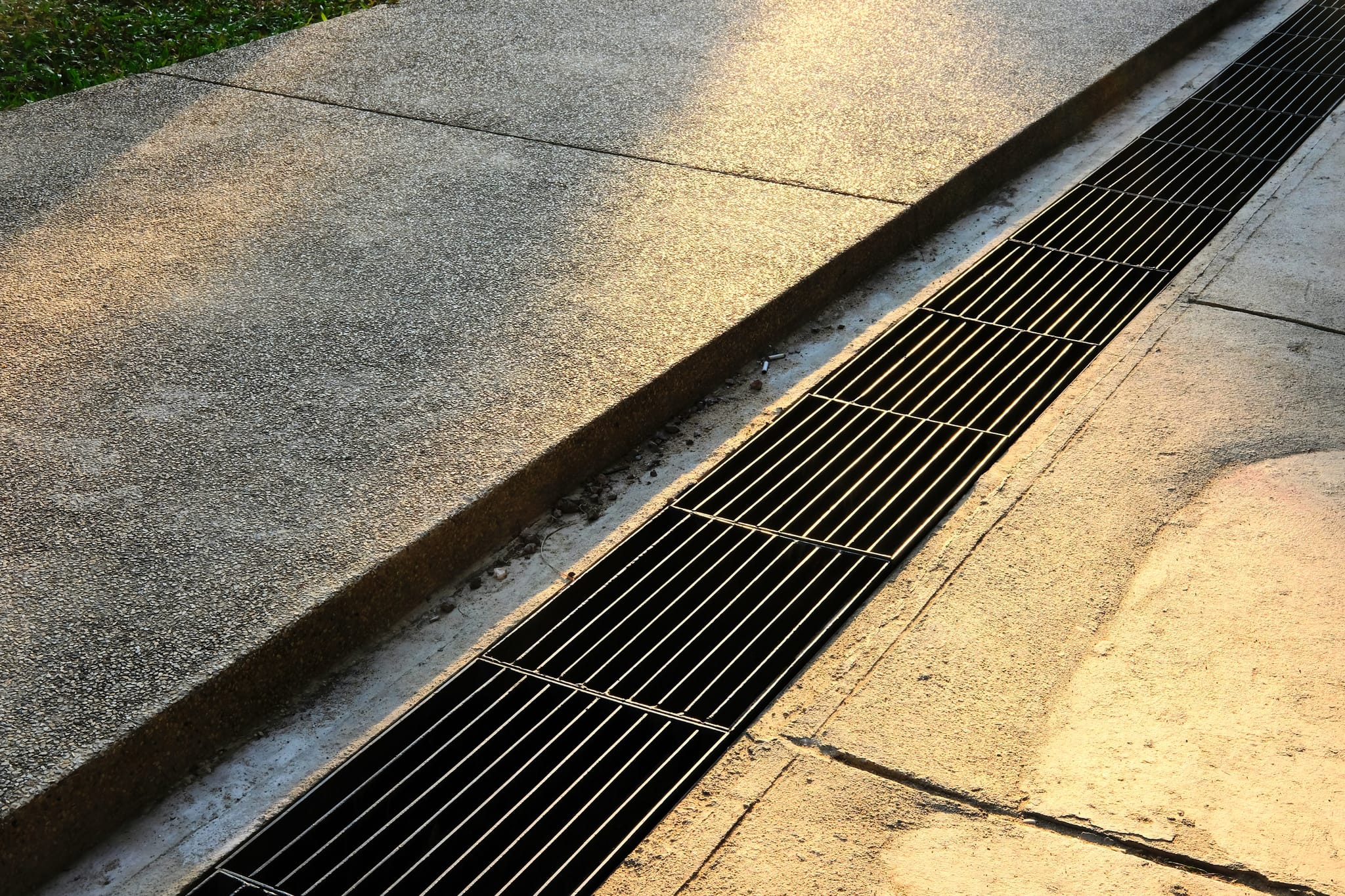
A channel drain, also called a trench drain, is a narrow grated trench set flush with the deck surface. It catches sheet flow along a line before the water reaches places it should not go, then routes it through underground pipe to a safe discharge point. It sits flush with the surrounding hardscape, so it blends into the deck.
Where Channel Drains Go on a Pool Deck
- Along the pool deck perimeter where the deck meets the yard or the house
- At patio transitions where the pool deck meets a covered patio or outdoor kitchen
- Across low points where water already collects after rain
Placement comes from a site evaluation of slope, runoff direction and the hardscape layout. The drain is sized for the area draining to it, not picked from a template.
Trench Drain vs. Grate vs. Surface Drain
Drain type | Best for |
Channel (trench) drain with grate | Linear water flow along a deck edge, walkway or building perimeter |
A single low spot where water pools in one area | |
French drain | Water held in the soil around the deck, not on the surface |
Many pool areas need more than one type. We design them to share one outlet.
When the Drain Is Not the Real Problem
Existing channel drains in pool decks can develop gaps between the drain body and the surrounding concrete. Water then bypasses the drain entirely. These joints can be sealed, and where the concrete around the drain has cracked or settled, it can be repaired so water flows back into the drain.
If the deck itself is heaving or badly cracked, a drain alone will not fix it. Replacing the deck is often the better answer. Concrete pavers are a practical choice on Fort Worth clay because individual units can be lifted and reset if the soil moves, instead of cutting out whole sections of poured concrete. See our pool remodeling page for deck options.
Signs Your Pool Deck Needs Better Drainage
- Water stands on the deck long after the rain stops
- Water runs from the deck toward the house or garage
- An existing drain clears water more slowly than it used to
- Gaps have opened between a drain and the concrete around it
- Slippery standing water in the same spots after every rain
Pool Deck Drain FAQs
Is a channel drain the same as a trench drain?
Yes. Both names describe a narrow grated trench that catches surface water along a line.
Can a channel drain be added to an existing pool deck?
In many cases, yes. A section of deck is cut, the channel is set flush with the surface and the water is piped to a discharge point. A site visit confirms whether the existing deck and grade allow it.
What if my existing pool deck drain is not working?
Common causes are gaps between the drain and the concrete or settled concrete around it. Both can usually be repaired without replacing the whole drain.
Get a Pool Deck Drainage Assessment
Greenview Landscaping designs and installs channel drains for Fort Worth homeowners and has served Tarrant County since 2016. Call (817) 393-3144 for a free drainage assessment and a written estimate before any work is scheduled.